03. The AR Headsets of the Future
The AR Headsets of the Future
Stereoscopic AR
Now that you have gotten a chance to try AR on a 2D screen, let’s discuss a little bit about AR in a stereoscopic headset.
Currently in the industry, there are a few companies working on the technology. Some of the more prominent AR headsets are the Microsoft Hololens, the Meta, and Magic Leap.

The Difficulties of Making AR Headsets
Unlike VR, AR headsets face many additional challenges that are keeping them from being a consumer product just yet.
SLAM
For starters, all AR headsets require precise Computer Vision technology to understand what the world looks like and where to position virtual objects, in order to augment the world.
The technical term for this is SLAM or Simultaneous Localization and Mapping. SLAM is not only useful for detecting where to place virtual objects, but also for tracking the relative 6-DOF movement of your headset in the real world. While not perfect just yet, SLAM technologies are becoming A LOT more robust to handle various lighting conditions and different types of shapes.
And this is good news for VR as well as it will enable 3 DOF headsets to have 6 DOF tracking without the need of any external sensors. In fact, Microsoft's latest VR headset will be using the same SLAM technology that it uses in the Hololens. Expect to see a lot more information on this in the upcoming months.
Displays
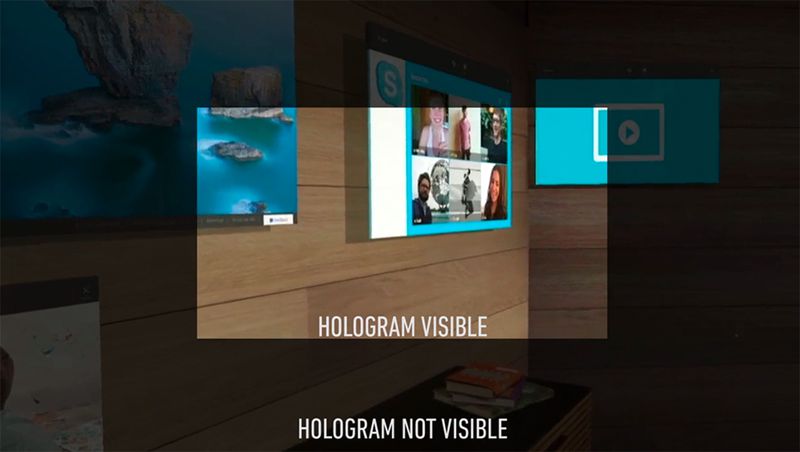
Another big limitation of current AR headsets is the display technology and resulting limited field of view. For many headsets like the Hololens, they only augment a part of the world. In this picture from The Verge, the augmented world translates to roughly 22 degrees of your field of view.
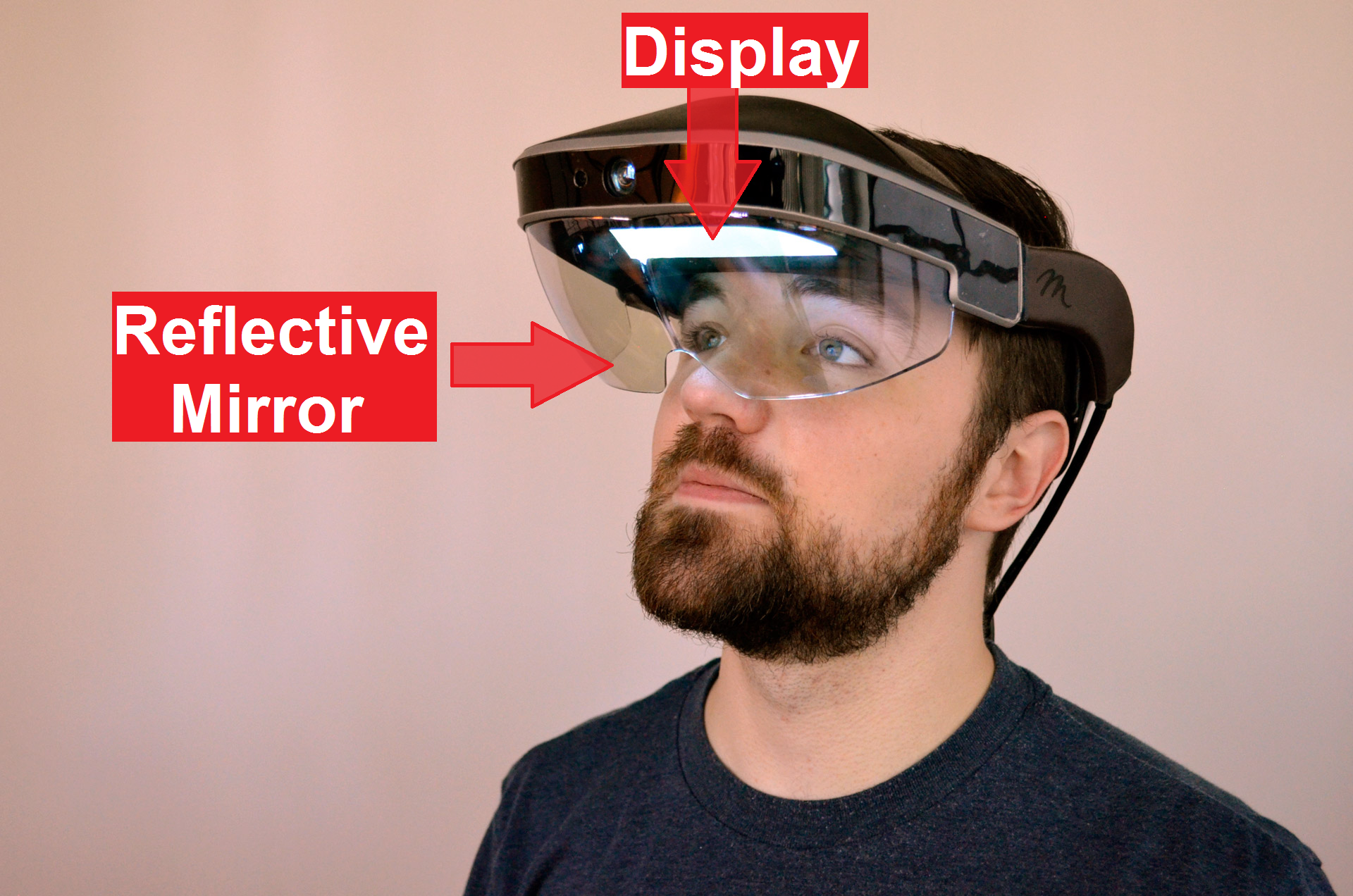
Not all AR headsets have this problem. A notable example is the Meta Developer Kit 2, which uses a reflective mirror and a display above your head to create the effect of AR. This results in a Field of View close to 90 degrees. For comparison, the GearVR has a field of view close to 98 degrees and the Vive and Rift have a Field of View around 110 degrees. We will dive more into experiencing the Field of View in the next video.